
Included yard technologies
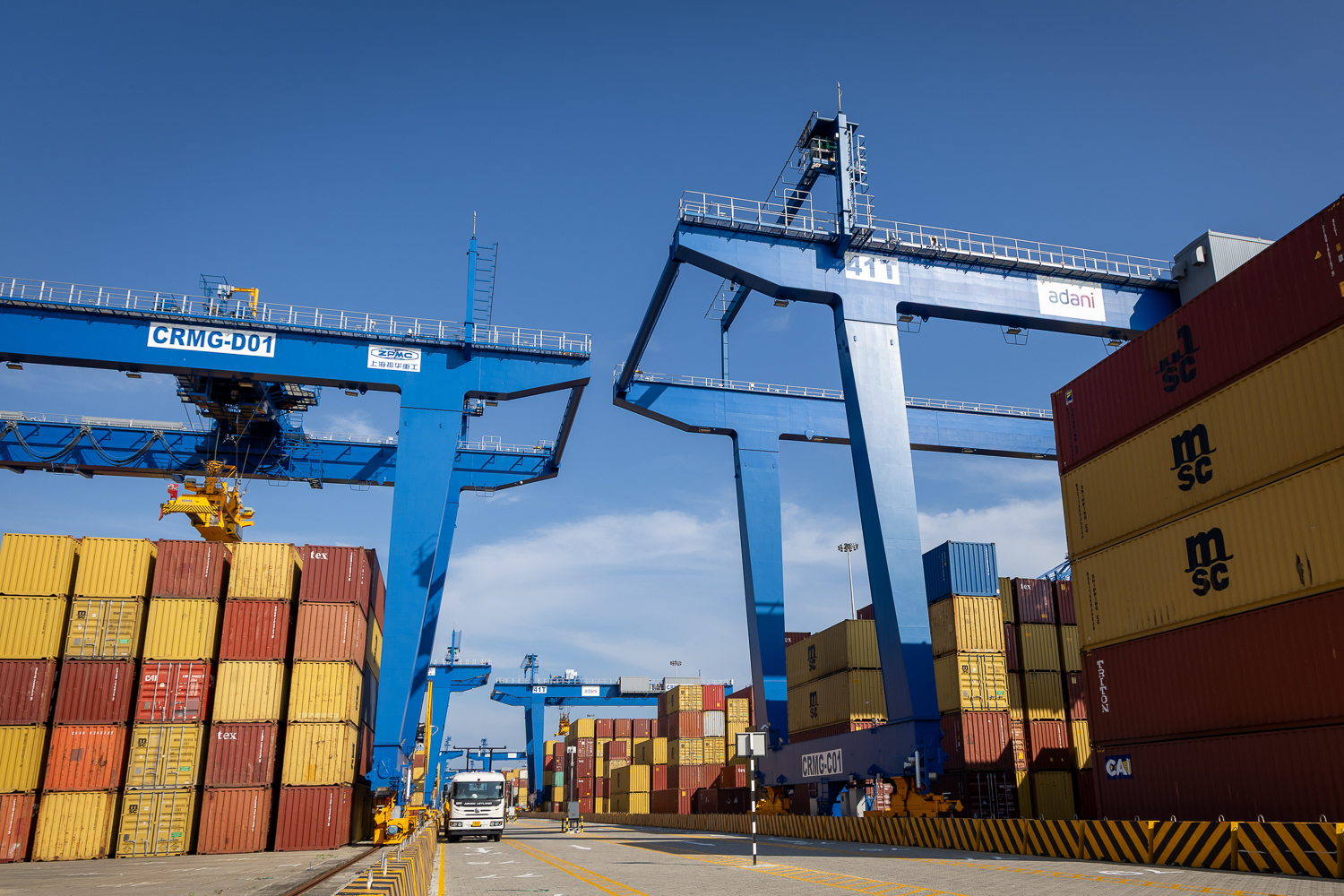
- RTG–RMG solutions – OCR systems that identify containers during gantry crane operations in the yard.
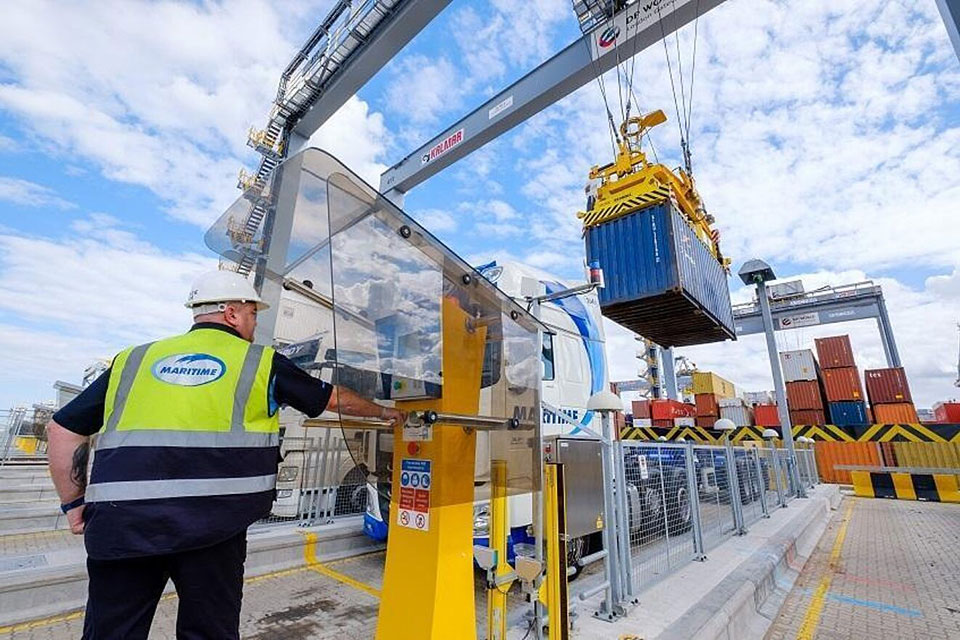
- Landside transfer kiosks – guide truck drivers during handovers at ASC transfer zones.
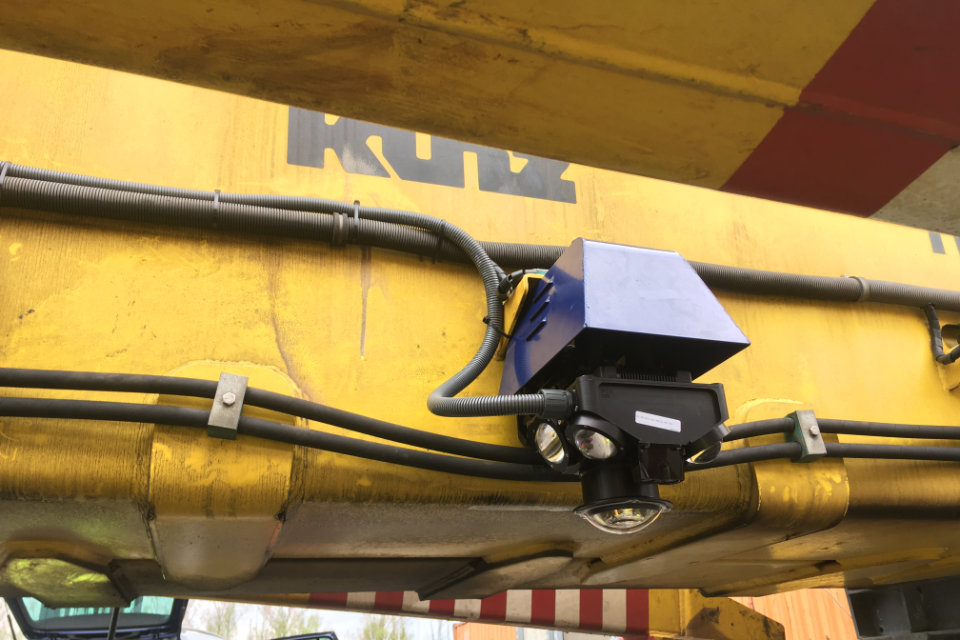
- Spreader camera – gives operators a real-time view beneath the spreader for safer, more accurate moves.
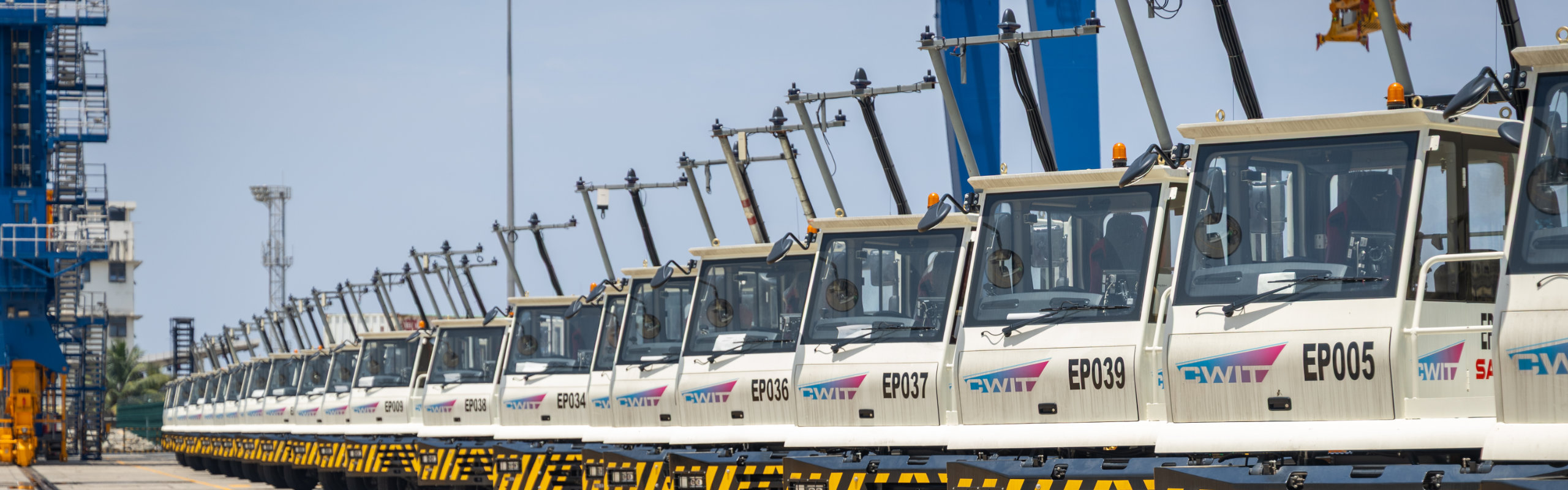
- Terminal truck location technologies – our hardware that tracks and transmits the real-time location of terminal trucks.
Frequently Asked Questions about Yard Automation Technology
Move-per-container ratios, reshuffle elimination rates, bay utilization percentages, equipment productivity KPIs, retrieval time distributions, density optimization trending, peak capacity headroom, carrier performance correlation, and ROI analytics driving continuous yard layout refinement, staffing optimization, and infrastructure investment decisions.
Distributed edge processing gateways segment massive yards into coordinated positioning zones supporting millions of daily location updates, cloud analytics bursting, modular anchor expansion, mixed equipment protocol translation, and performance validated for 2+ million TEU facilities maintaining uniform accuracy across geographically dispersed yard complexes.
Gate arrival positioning feeds yard staging optimization, container retrieval requests from quay operations receive prioritized sequencing, rail handoff coordination maintains schedule compliance, and real-time location updates synchronize across operational domains ensuring end-to-end container flow visibility and constraint-based planning accuracy.
Live interactive 3D yard models display current stacking configurations, planned vs actual positions, equipment location overlays, density utilization color-coding, reshuffle risk highlighting, bay efficiency scoring, real-time slot availability, and path prediction trajectories supporting supervisor decision-making and operator navigation assistance.
Unified task dispatch matches containers to optimal vehicle capabilities considering current positioning, battery/fuel status, maintenance schedules, traffic congestion avoidance, shortest path routing, load compatibility, and multi-vehicle de-confliction ensuring coordinated fleet movements without stacking bay collisions or operational deadlocks.
Predictive analytics simulate future retrieval sequences across confirmed bookings using crane reach limitations, stacking geometry constraints, arrival pattern statistics, and priority sequencing identifying containers needing proactive repositioning during low-activity periods eliminating 70-90% of traditional reactive reshuffles consuming equipment capacity.
Spatial optimization algorithms maximize vertical stacking while ensuring retrieval accessibility calculating optimal bay configurations, ground slot utilization ratios, tier height limits by equipment type, walkway clearances, stability margins, fire lane compliance, and real-time density heatmaps adapting to changing container mixes and operational priorities.
Ultra-wideband (UWB) positioning networks with fixed anchor nodes and mobile tags deliver centimeter-level accuracy tracking containers, chassis, ITVs, straddle carriers, reach stackers, and yard personnel across expansive stacking areas maintaining continuous visibility through multiple tiers regardless of equipment density or stacking configurations.
