
Accurate container placement in every yard slot
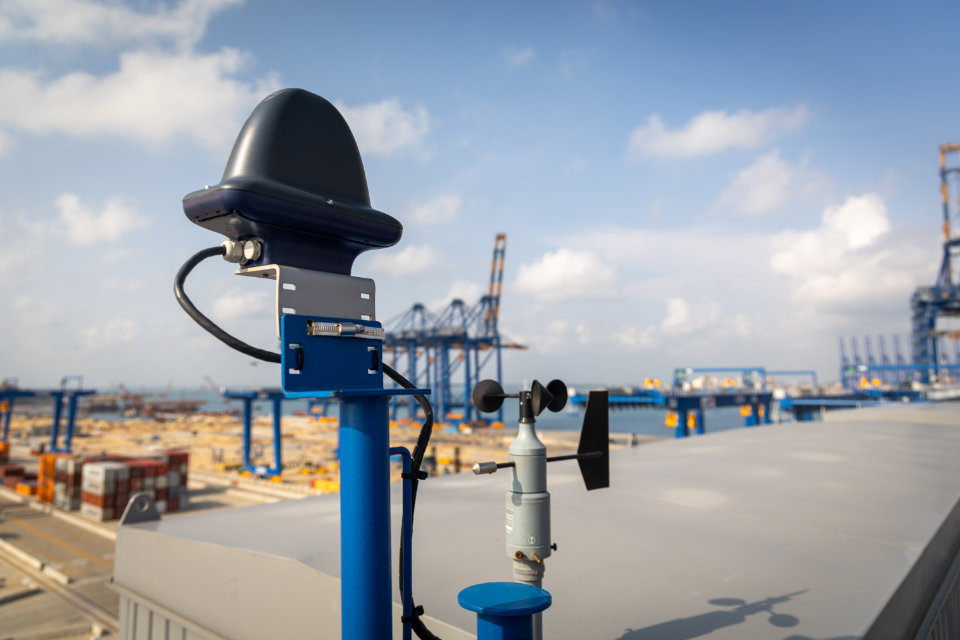
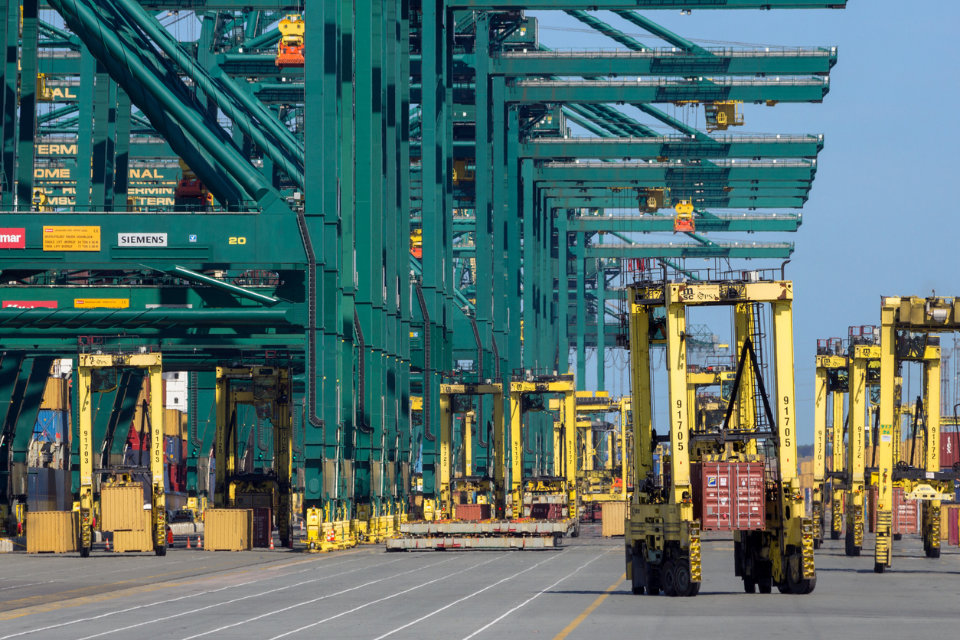
Under the STS crane, GNSS is unreliable due to obstruction from the crane structure and nearby vessels. Here, Camco’s RTLS relies on UWB technology with high-precision accuracy. This allows the system to align the straddle carrier before the container is lowered. The driver receives clear alignment guidance via a small LED display in the cabin.
Again, with full auto–job stepping: only when location and alignment are correct will the twistlocks activate, allowing the container to be set down safely.
The backend software behind our RTLS system is CHEOPS, while the user interface runs entirely within THE BRIDGE, including a real-time 2D map showing all moving CHEs — including straddle carriers.
The Straddle Carrier Identification & Positioning System ensures that each machine is recognized and guided to the correct set-down point. Containers are placed exactly where the TOS expects them — not approximately.
Precision through sensor fusion
The carrier’s movement is tracked continuously with GNSS across the yard.
When approaching the stack, UWB refines the positioning to within single-digit centimeters, even in dense metal and container-dense environments.
At that precision:
- Drivers do not need to inch into place
- Yard cranes do not compensate for slight misplacements
- Inventory remains accurate and trusted
Operational impact
- Consistent, first-time-right container placement
- Significantly fewer rehandles across the shift
- Cleaner, dependable yard inventory state
- Lower cognitive load for drivers
- More predictable flows between yard and quay
A small improvement at each set-down removes a large amount of hidden work across the day.
The RTLS system operates within THE BRIDGE, where machine identity, job state and placement data are unified.
Every move is recorded, explainable and reproducible — regardless of who is driving or when the move occurs.
Operators see a real-time 2D map with all moving equipment — including assigned jobs.
Why it works
Yard inefficiencies rarely happen at speed.
They happen in the final seconds of positioning.
This system stabilizes that moment.
- Identify the machine.
- Guide the placement.
- Trust the yard.
