
RO-RO terminals
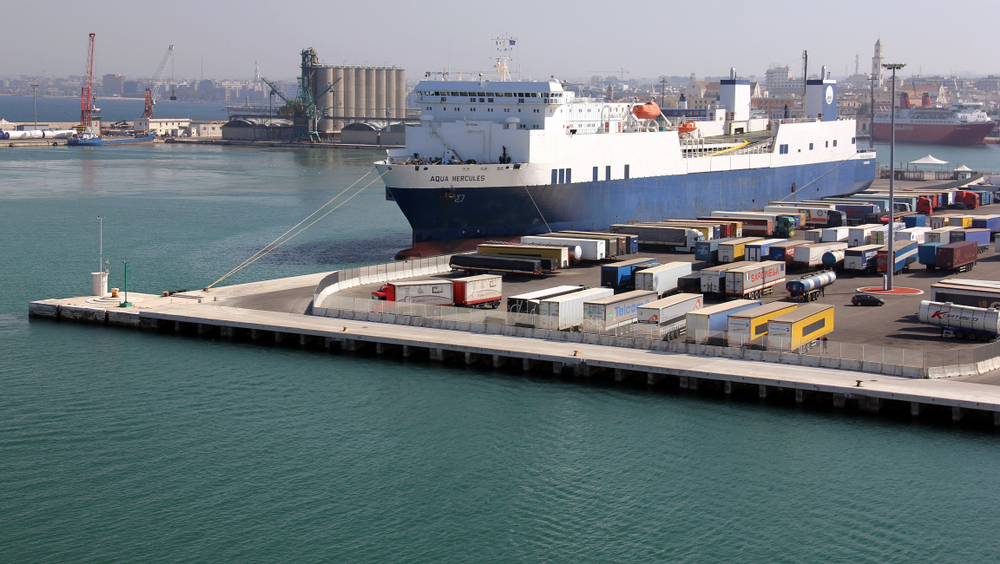
RO-RO terminals have distinct operational requirements compared to container terminals. Trailers are directly handled and therefore more exposed to impact, wear, and handling damage. For this reason, higher picture quality is essential to accurately document the condition of trailers upon entry and exit.
Special attention must be given to the chassis, including critical components such as landing legs, kingpins, bumpers, and lighting. These elements are particularly vulnerable and require thorough visual inspection.
Gate processes at RO-RO terminals are generally more straightforward and faster, as cargo remains on its own wheels. Trailers are parked in clearly defined slots, typically positioned by truck drivers themselves, which demands precise guidance, visibility, and monitoring to maintain order and efficiency.
Overall, RO-RO terminals benefit from tailored solutions that combine high-resolution imaging, reliable inspection coverage, and optimized yard management to support smooth operations, reduce disputes, and enhance asset protection.
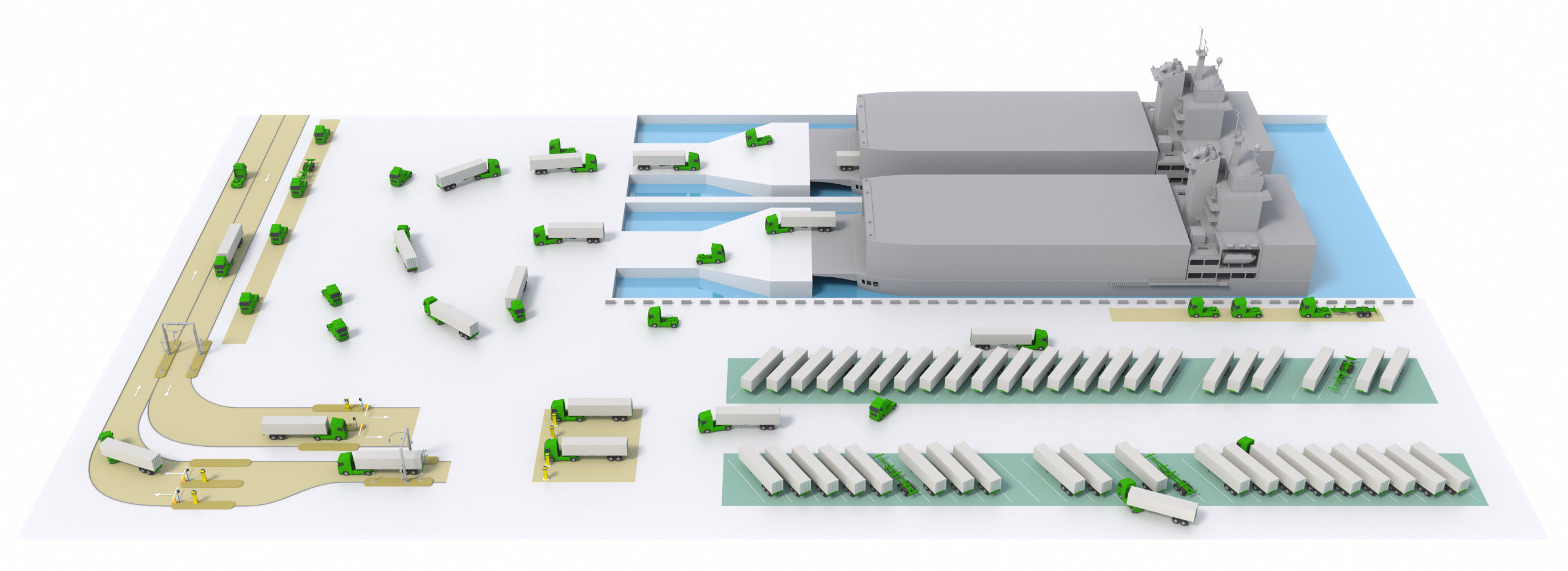
OCR portals for RO-RO
OCR portals for RO-RO are equiped with an extra set of linescan cameras in order to capture also the chassis and the landing-wheels. Furthermore the system has specific software to read trailer numbers, these are less standardised. Contrary to shipping containers, trailer numbers do not have a fixed position on the trailer surface, making accurate reading more challenging. In addition, trailers are often marked with other data such as company name, phone numbers, fleet info, making it harder to detect the actual trailer number.
Trailer or fleet numbers
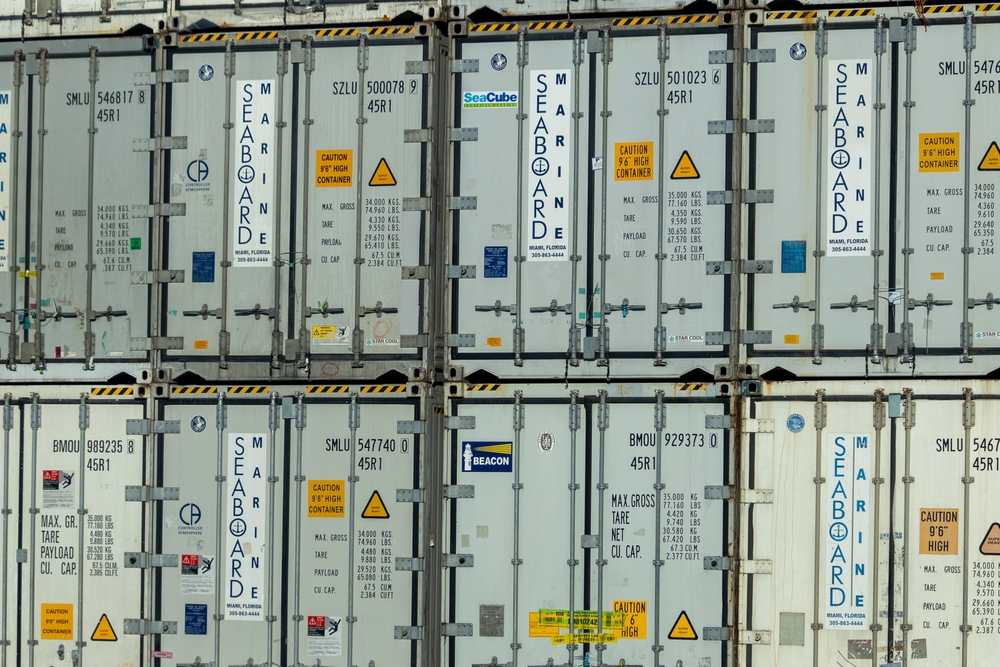
In Europe, trailer numbers are either standardized ILU numbers or non-standardized fleet numbers. The Camco portals can read both. The ILU-code (EN 13044-1) is an owner-code for the identification of European Intermodal Loading Units
In the US, trailer numbers are either non-standardized fleet numbers or numbers built up almost as a container number. Camco systems are qualified to read both standardized and non-standardized numbers
Yellow plate number
From 1 July 2019, all loading units for Combined Transport (cranable semi-trailers, non-ISO standard containers, swap bodies) must also include a railway-specific yellow code number plate. This additional yellow plate defines size and type of the loading unit: gauge, length class, XL code etc. For a loading unit to be carried out on a particular route, its gauge codes must not exceed that of the lines making up that route.
