
Camco’s yard software includes
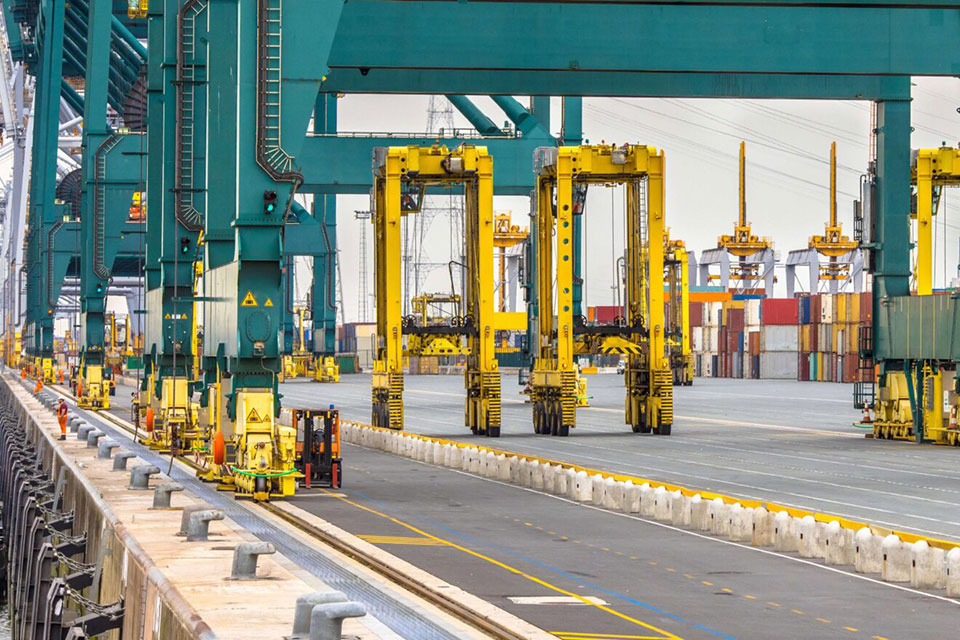
- RTLS (CHEOPS) – delivers continuous vehicle positioning across the yard using GNSS and UWB. RTLS validates job execution, enables automatic job stepping and ensures that set-down positions match the TOS plan without manual adjustment.
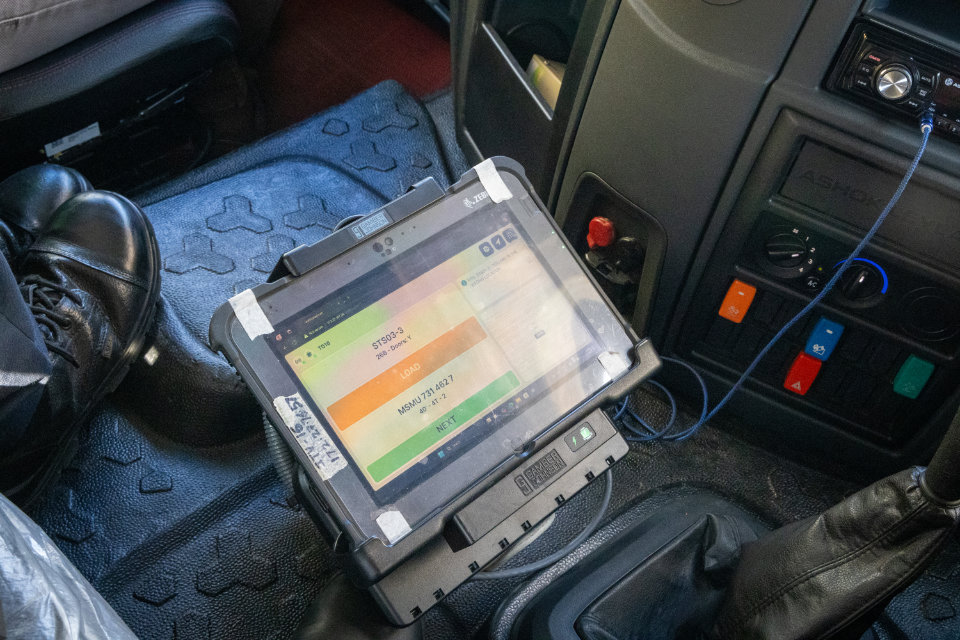
- Vehicle Mounted Terminal (VMT) – the in-cab interface that presents assignments, guidance, job status and operational instructions. The VMT helps drivers perform moves correctly on the first attempt and reduces variation between operators.
Together, these applications stabilise yard operations, reduce rehandles and improve the accuracy of every move from stack to quay.
Frequently Asked Questions about Yard Management Software
Horizontally scalable architecture supports millions of position updates daily across expansive yard footprints with distributed processing clusters, edge computing gateways, cloud analytics bursting, and modular deployment configurations validated for high-density terminals processing 2+ million TEU annually maintaining real-time performance at scale.
Comprehensive utilization reporting tracks bay efficiency ratios, reshuffle reduction percentages, equipment productivity KPIs, dwell time distributions by carrier/type, density optimization trends, peak period capacity headroom, move-per-container metrics, and ROI analysis supporting continuous yard layout refinement and capital investment justification.
Bidirectional TOS synchronization provides current yard inventory status, slot availability queries, stacking plan validation, work order confirmation feedback, exception alerting, capacity forecasting, and performance metrics feeding terminal-wide planning while receiving optimized stacking instructions, priority retrieval requests, and operational constraint updates.
Real-time task dispatch coordinates ITVs, reach stackers, straddle carriers, and AGVs with optimal container-to-vehicle matching, dynamic routing through least-congested paths, traffic management de-confliction, battery/condition status monitoring, and performance benchmarking ensuring maximum equipment productivity across diverse yard handling fleets.
Forward-looking reshuffle prediction models simulate future retrieval sequences based on confirmed bookings, statistical arrival patterns, crane capacity constraints, and yard layout geometry proactively repositioning containers during low-activity periods or opportunistic equipment availability eliminating 70-90% of traditional reactive reshuffle operations.
AI-powered stacking algorithms analyze container destination timing, weight distribution requirements, equipment reach limitations, reshuffle minimization potential, bay stability constraints, retrieval sequence efficiency, and real-time operational changes generating optimal stacking plans that maximize vertical density while ensuring future retrieval accessibility.
Ultra-wideband (UWB) positioning technology combined with inertial measurement augmentation delivers sub-meter accuracy tracking container movements between yard zones, storage blocks, rail corridors, gate staging areas, and quay handover points maintaining continuous visibility regardless of stacking height, equipment obstruction, or environmental interference.
CHEOPS Real-Time Location System (RTLS) provides centimeter-level container positioning accuracy across terminal yards enabling intelligent stacking optimization, automated reshuffle prediction, dynamic equipment routing, maximum density utilization, real-time slot availability, and predictive planning that collectively minimize container moves while maximizing yard throughput capacity.
