
Camco’s crane software includes
- Crane OCR System (COS) – the integration layer connecting crane PLC data, OCR systems, operator views and the TOS. COS ensures that crane moves, sensor events and operational data stay synchronized.
- Bay Load Verification (BLV) – validates every loading and discharge move against the bay plan in real time. BLV updates BAPLIE automatically, prevents mis-stowage and reduces corrective moves in the current and next port.
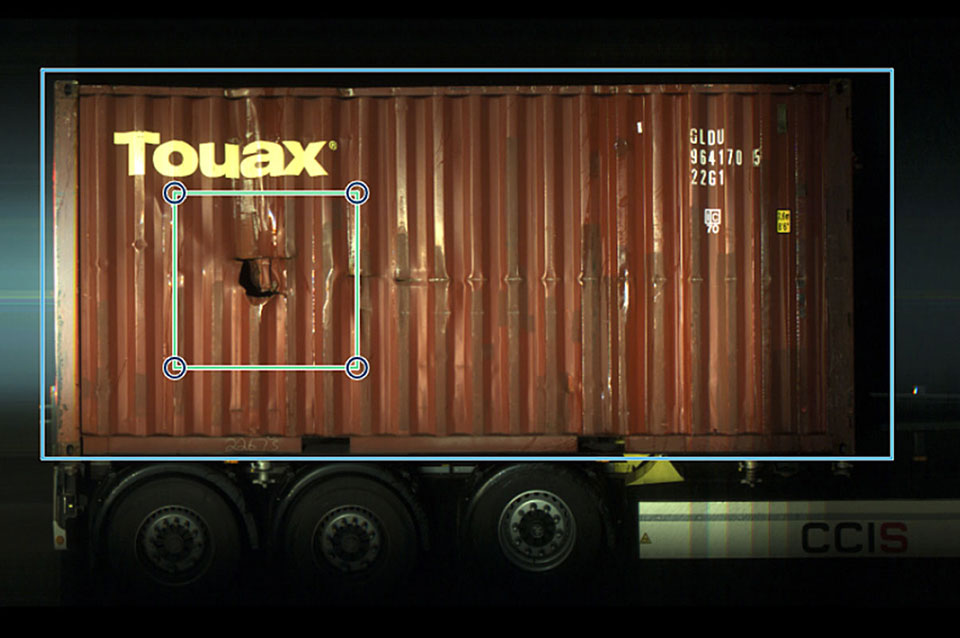
- Automated Damage Inspection (ADI) – captures high-resolution images during crane operations to document container condition and support downstream workflows such as claims handling and equipment control.
Together, these applications support stable crane operations, reduce manual corrections and improve the reliability of every move on the waterside.
Frequently Asked Questions about Crane Operating Software
Crane performance benchmarking tracks moves-per-hour, cycle time distributions, accuracy rates, sway mitigation effectiveness, operator productivity comparisons, maintenance condition monitoring, peak period capacity utilization, and ROI calculations supporting crane fleet optimization, staffing decisions, and capital replacement planning.
Crane cab HMI displays provide approach countdowns with container code previews, augmented reality positioning guides, sway status indicators, pick confirmation checklists, next-move sequencing, exception photo documentation, performance coaching prompts, and hands-free voice interaction reducing operator cognitive load while maintaining safety and productivity standards.
Bidirectional TOS synchronization receives optimized work sequences, confirms container pick completion with visual verification, reports actual cycle times against planned targets, feeds crane productivity metrics into planning algorithms, handles exceptions with supervisor escalation, and maintains container location records ensuring planning accuracy reflects field reality.
Real-time sway compensation algorithms analyze container pendulum motion during hoist, trolley travel, and gantry movements generating predictive counter-commands to crane drives minimizing oscillation amplitude, reducing stabilization wait times, protecting suspended loads, and enabling higher travel speeds while maintaining positioning precision.
Multi-camera arrays capture container codes from approach, side, and overhead angles with AI-powered recognition, cross-reference against TOS work orders, augmented reality positioning overlays on crane cab displays, spreader twistlock confirmation sensors, and real-time verification feedback preventing incorrect retrievals that cascade delays through terminal operations.
Comprehensive coverage includes Ship-to-Shore (STS) cranes, Rail-Mounted Gantry (RMG) cranes, Rubber-Tired Gantry (RTG) cranes, STS gantry cranes serving both vessel and yard operations, and reach stackers with OCR-capable spreaders providing uniform automation benefits across diverse quay and yard crane fleets.
Pre-read container identification during approach phase eliminates search cycles, automated positioning guidance reduces precision maneuvering time, verification confirmation prevents pick errors requiring rework, anti-sway compensation accelerates load stabilization, and optimized work sequencing minimizes trolley travel distances collectively reducing cycle times by 20-40% per move.
COS automates container identification and crane operation guidance using computer vision technology that reads container codes during spreader approach, verifies correct container retrieval, provides precise positioning instructions, eliminates manual visual confirmation, and integrates crane telemetry with TOS planning ensuring error-free STS, RMG, and ship-to-shore operations.
