
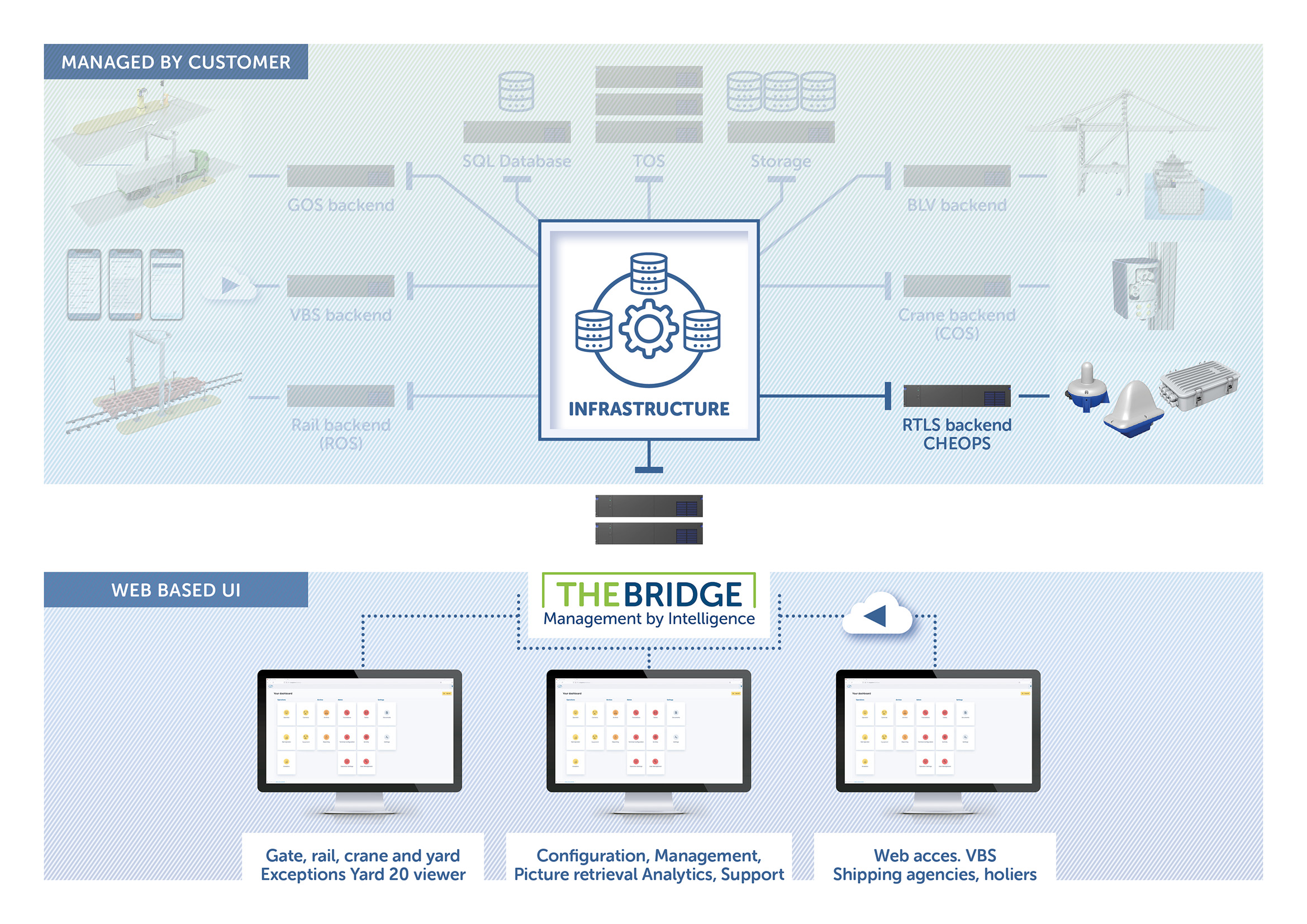
RTLS backend: CHEOPS
CHEOPS powers Camco’s back-end server software, wirelessly connecting with all RTLS devices installed on the CHE’s. It interfaces seamlessly with the TOS, THE BRIDGE (2D maps), and THE TWINBRIDGE (3D maps).
Integration in THE BRIDGE
Camco fully integrates its RTLS solutions into THE BRIDGE.
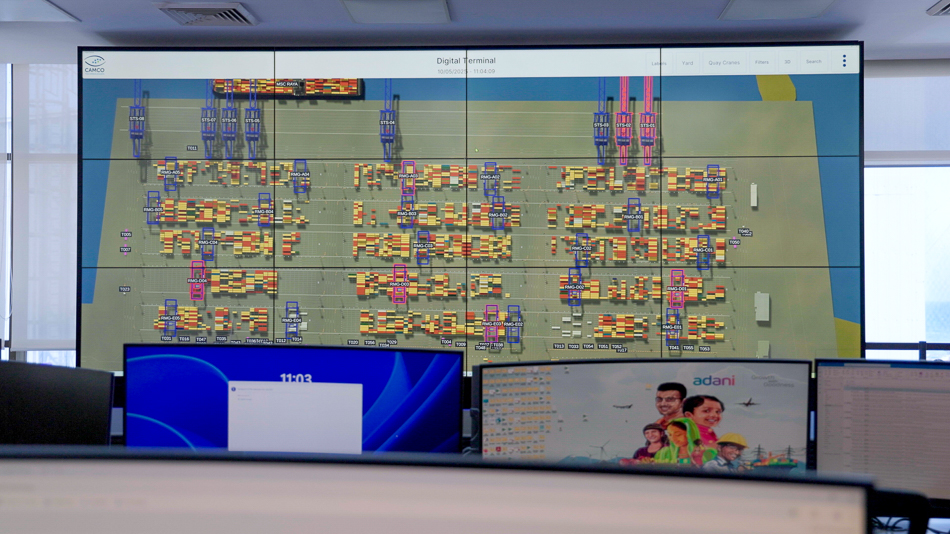
A 2D terminal map displays all CHE’s in real time, showing ongoing work orders and allowing users to define restricted areas with alarms that trigger when unauthorized CHE’s enter these zones.
THE TWINBRIDGE
The combination of static and dynamic containers, along with IoT-enabled CHE data, has allowed Camco Technologies to develop new automation applications, such as real-time digital twin technology.
This technology creates a visually accurate, interactive digital model of the terminal, containers, and moving equipment. It updates in real-time, reflecting all current activities. As a result, THE TWINBRIDGE helps identify weaknesses, test process changes, and calculate cost savings and performance improvements.
For example, the virtual twin can test methods to speed up loading and unloading, or explore ways to accommodate more vessels.
Vehicle Mounted Terminals
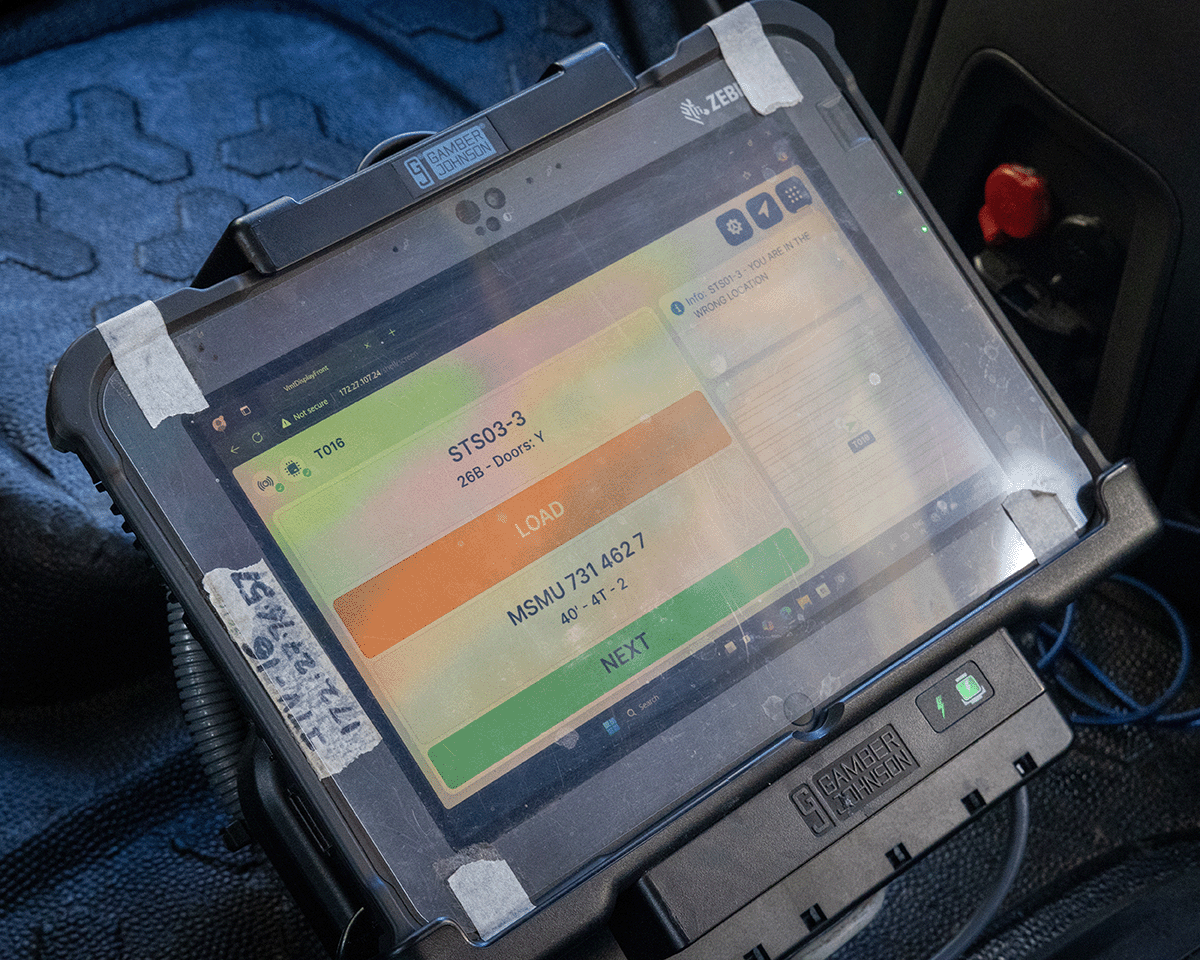
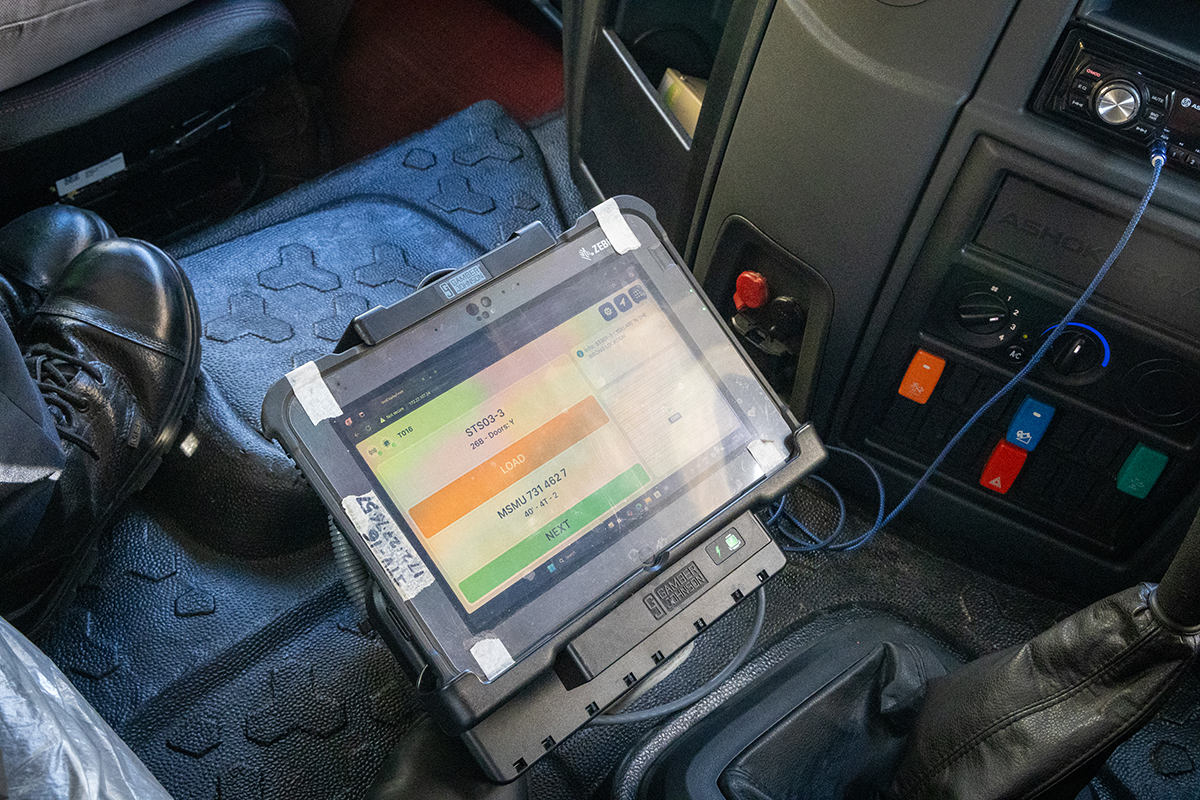
Vehicles as straddle carriers, internal trucks, Empty handlers, top handlers, reach stackers all have VMT Vehicle Mounted terminals. Usually, the driver gets instructions from the TOS via this screen. With Camco’s RTLS solution the TOS screen is replaced by an interactive user interface, showing a map and job details.
Frequently Asked Questions about CHEOPS RTLS System
Distributed gateway architecture segments expansive yards into manageable positioning zones with seamless handoff between coverage areas supporting mixed equipment fleets, varying stacking heights, rail siding integration, gate staging coordination, and quay buffer management across geographically dispersed yard configurations maintaining uniform accuracy and performance.
Live 3D yard visualization, heatmaps of utilization density, equipment location/status overlays, reshuffle risk highlighting, bay efficiency scoring, move-per-container trending, exception alerting zones, capacity headroom indicators, and mobile operator displays consolidating yard intelligence into actionable operational decision support interfaces.
Precise pick-face coordinates eliminate crane searching time, stacking plan validation prevents placement errors, anti-collision zoning protects adjacent operations, real-time container verification confirms correct retrieval, and performance telemetry feeds crane productivity optimization ensuring seamless handoff between yard transport and quay/rail stacking activities.
Spatial algorithms maximize vertical stacking while maintaining retrieval accessibility calculating optimal bay configurations, ground slot utilization, tier height optimization, walkway clearances, fire lane compliance, stability margins, and equipment maneuvering envelopes adapting continuously to changing inventory mixes and operational priorities.
Dynamic task allocation matches containers to optimally positioned equipment types considering current loads, battery status, maintenance schedules, traffic congestion patterns, shortest path routing, and capability requirements while de-conflicting multiple vehicles converging on same stacking bays ensuring maximum fleet productivity without collisions.
Forward predictive analytics simulate thousands of future retrieval scenarios based on confirmed bookings, statistical patterns, crane reach limitations, and yard geometry proactively identifying containers needing repositioning during low-activity windows eliminating 70-90% of traditional reactive reshuffles that consume equipment capacity and delay operations.
Real-time 3D yard mapping visualizes current stacking configurations against optimal plans considering container destination timing, weight/balance requirements, equipment accessibility, reshuffle prediction algorithms, bay stability limits, and retrieval sequence efficiency continuously recalculating stacking recommendations adapting to live operational changes.
Ultra-wideband (UWB) radio frequency technology combined with time-of-flight triangulation delivers centimeter-level positioning accuracy across terminal yards tracking containers, chassis, ITVs, reach stackers, straddle carriers, and yard personnel in real-time regardless of stacking height, equipment density, or environmental obstructions providing unprecedented operational visibility.
