
COS INTEGRATION
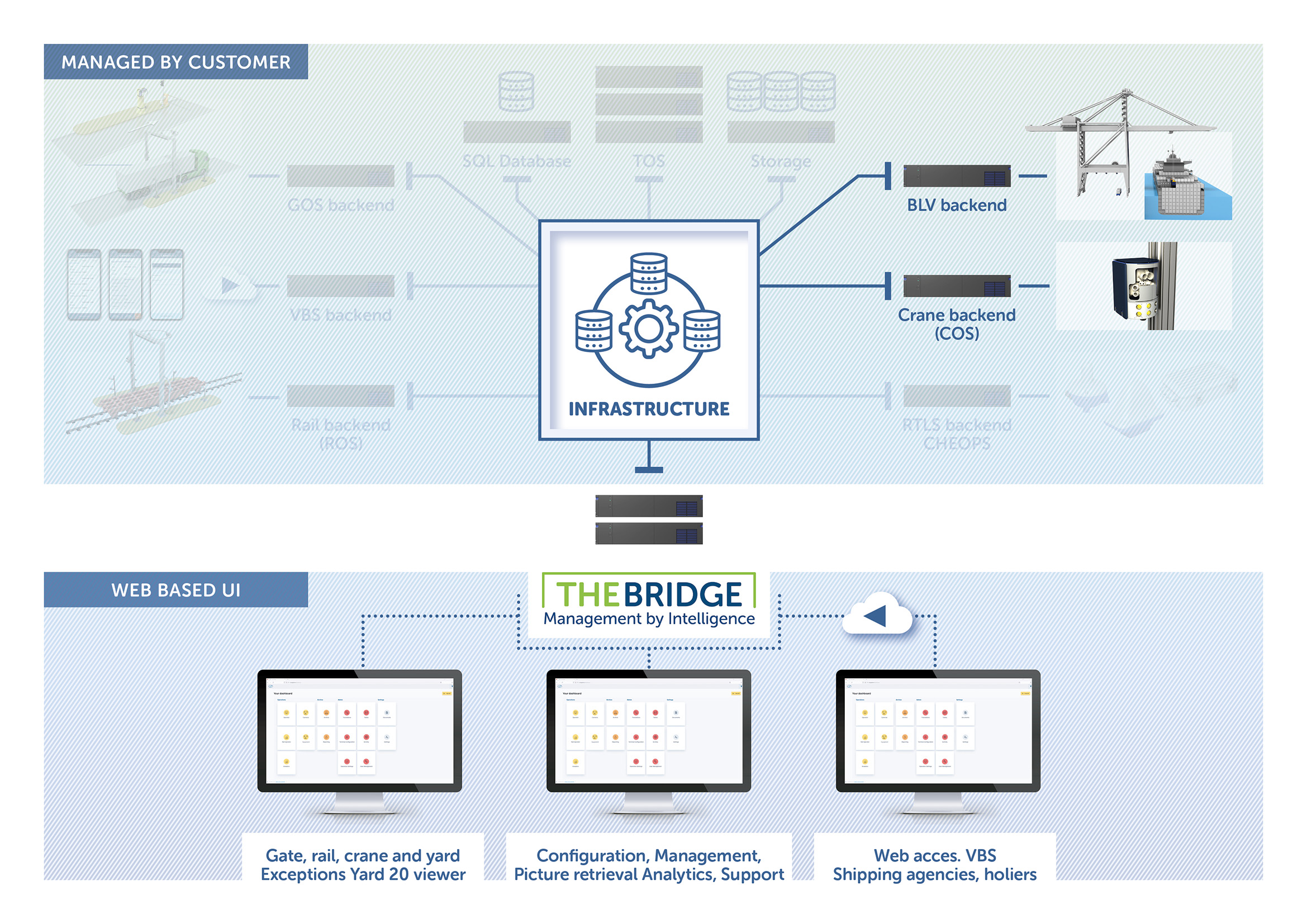
The COS server connects to multiple systems, including the TOS, storage servers, SQL database, crane OCR controllers, and THE BRIDGE.
Container moves between vessel and yard are transmitted back to the TOS via COS, while any exceptions or anomalies are forwarded to THE BRIDGE for operational follow-up.
All captured images are securely stored on the image storage server, providing full visual traceability for claims handling, audits, and performance analysis.
CRANE OCR CONTROLLER
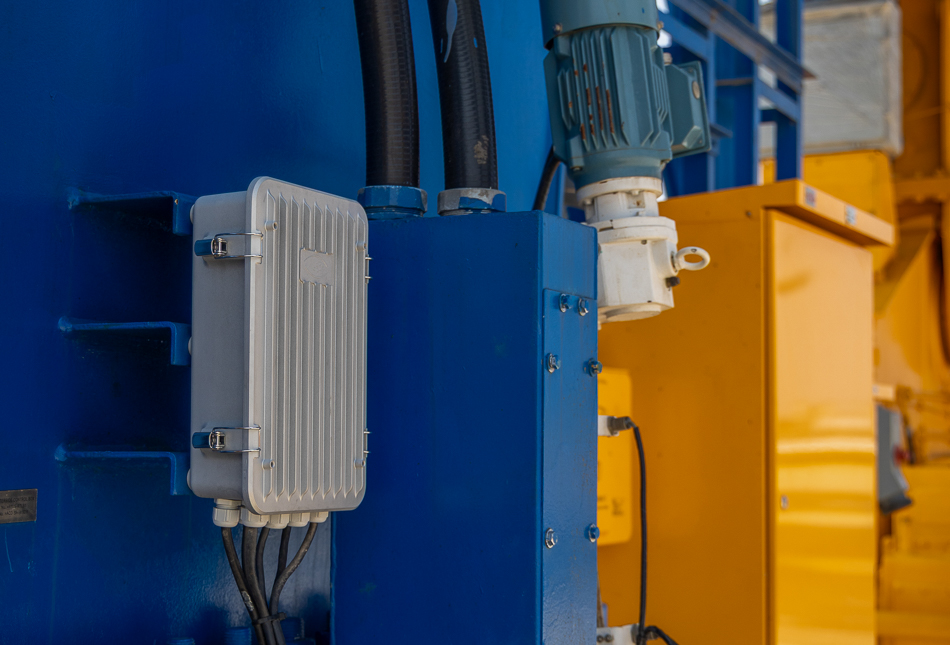
At the heart of every crane installation is the Crane OCR Controller—an industrial computer located in the crane e-house. This controller is connected to the camera systems, the crane PLC, and the backend servers in the computer room, where the COS (Crane OCR System) is hosted.
The PLC interface provides real-time operational data such as spreader position, spreader status, and—when available—STS crane location. This data is combined with visual information from the cameras to enable accurate container identification, move verification, and condition monitoring.
Frequently Asked Questions about Crane OCR System COS
Intuitive crane cab HMI displays container preview imagery, approach countdown timers, AR positioning guides, sway status indicators, pick verification checklists, next task sequencing, hands-free voice commands, exception capture controls, and real-time performance feedback reducing training requirements while enhancing operator confidence and decision-making accuracy.
Bidirectional real-time data exchange sends confirmed pick completions with visual proof, actual cycle times vs planned targets, crane location/availability status, exception conditions with photo documentation, performance telemetry for planning refinement, and receives next optimized work assignments maintaining closed-loop feedback between field execution and planning optimization.
Eliminating container search (15-30 sec/move), precision guidance reducing positioning time (10-20 sec/move), sway compensation shortening stabilization (5-15 sec/move), verification confirmation eliminating double-checks (5-10 sec/move), and optimized work sequencing collectively achieve 20-45 second per move productivity gains compounding to substantial daily throughput increases.
Triple verification protocol cross-checks OCR identification against TOS work order, confirms spreader twistlock engagement sensors match expected container, displays final confirmation image to operator with overlaid expected vs actual codes, and reports successful verification back to planning system before crane departure preventing downstream errors.
Real-time motion analysis tracks container pendulum dynamics during hoist initiation, trolley travel acceleration/deceleration, and gantry direction changes generating predictive counter-commands to crane drives preemptively damping oscillations before they develop allowing higher travel speeds, shorter stabilization delays, and smoother load handling throughout complete crane cycle.
Augmented reality overlays on crane cab displays show exact container center coordinates, approach vectors, safe clearance margins, sway compensation recommendations, and final positioning confirmation reducing trial-and-error maneuvering, minimizing spreader adjustments, protecting container corners, and achieving first-time correct pick rates exceeding 99.5%.
STS ship-to-shore cranes, RMG rail-mounted gantry cranes, RTG rubber-tired gantry cranes, MHC mobile harbor cranes, and reach stackers all gain automation benefits with COS spreader-mounted or gantry-integrated camera systems providing universal container identification regardless of crane type, size, or operational environment.
COS deploys multi-angle high-resolution cameras capturing container codes during spreader approach automatically identifying containers before physical engagement eliminating visual search cycles, preventing pick errors, accelerating positioning decisions, and providing positive verification that correct container selected for each crane work order execution.
